


What's In-Store April: Key Learnings
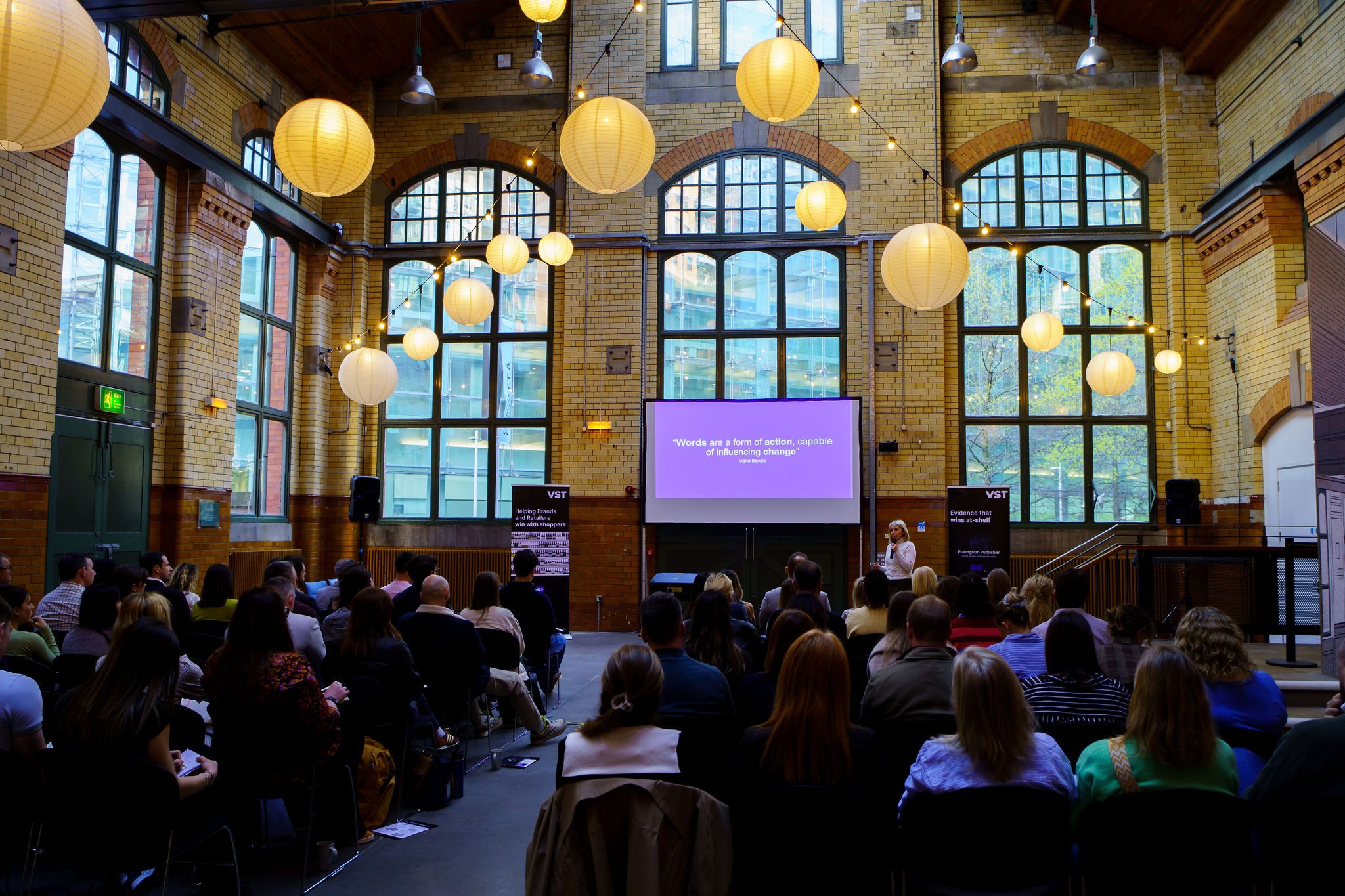
Last week, we hosted the second What's In-Store at the People's History Museum in Manchester. 60+ category, shopper insight and commercial leaders from across CPG and retail came together to talk about how shoppers are really behaving, and what that means at-shelf.
The opening keynote came bearing bad news. Or so it seemed.
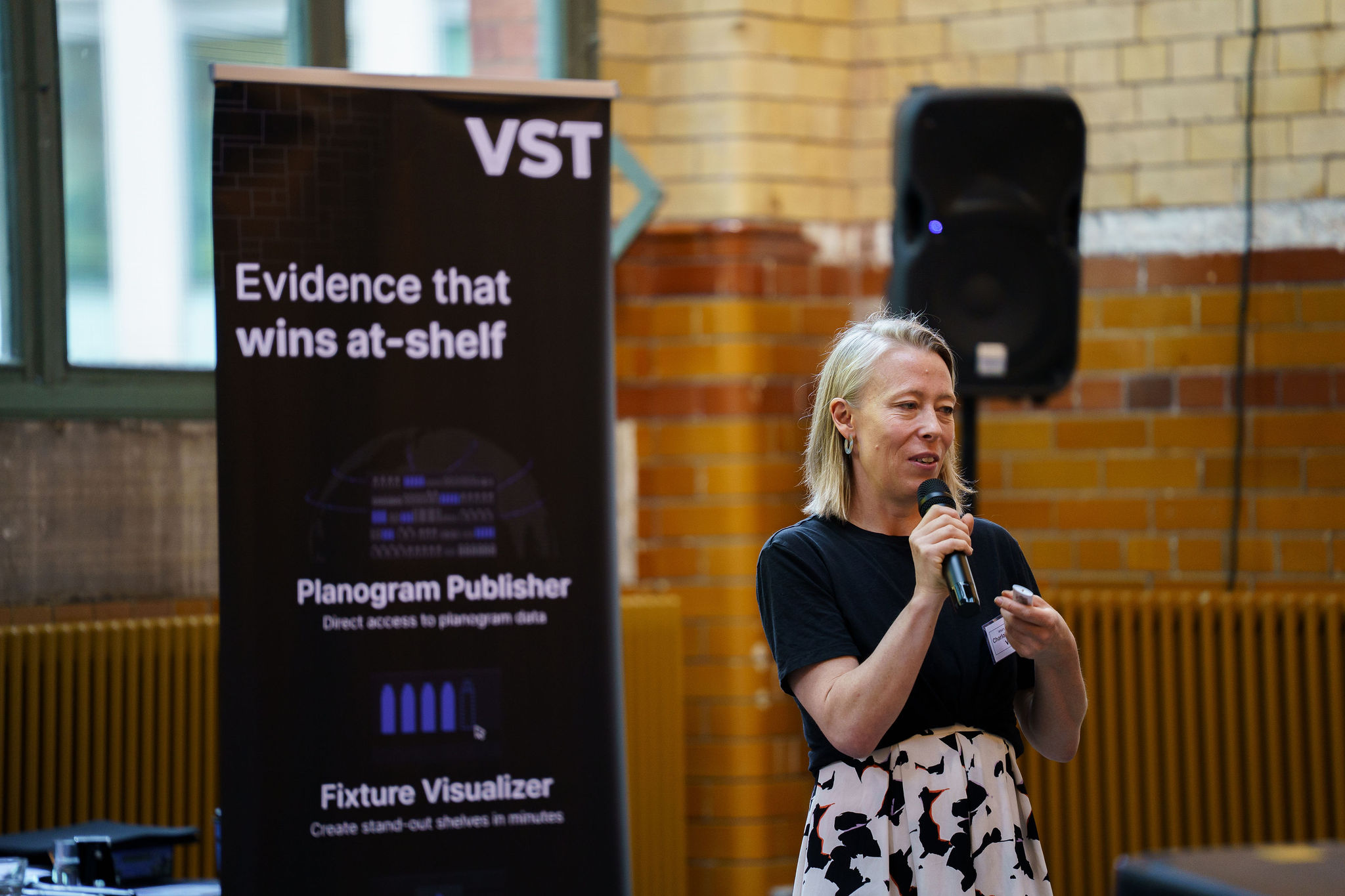
"The grocery industry is dying," Charlotte Kiddle, VST's Chief Research and Partnerships Officer, told the room. At least, that's what you hear if you read the news about GLP-1s. The death of snacking. The death of soft drinks. The death of alcohol. The death of confectionery. People buying less. People consuming fewer calories.
But we've been here before.
Charlotte walked the room through the diet pill boom that ran from the 1950s to the 1990s - fen-phen, rainbow pills, what we'd now call amphetamines. At its peak, 80,000kg of amphetamines were being distributed across the US. Around 5% of the population were on them. Side effects included hair and teeth falling out, abnormal heart rhythms, and death. Grocery survived.
Today's GLP-1 number is 1.6m UK prescriptions, or roughly 2% of the population. Also 2% of the population: people over 85, vegans, and viewers of an episode of Channel 5's Dogs Behaving (Very) Badly last year.
The point isn't that GLP-1s don't matter. They do. The point is that the headline trend is too flat to be useful on its own. Beneath the noise, something more interesting is happening - and it took the rest of the morning to unpack it.
Here's what we learned.
Shoppers contain multitudes
The dominant narrative in CPG right now is health. GLP-1s, clean ingredients, anti-UPF, protein in everything.
The reality is messier. While health is unquestionably growing, so is the opposite. Charlotte called it "un-health" - categories like BuzzBallz cocktails, ZYN nicotine pouches and energy drinks, all growing fast against the dominant story. Sometimes it's different shoppers doing opposite things. Sometimes it's the same shoppers doing opposite things at different times.
This isn't a contradiction to be resolved, rather the shape of how people shop.
VST's State of the Nation tracker, run twice yearly with a sample drawn from a base of 2,000+ UK shoppers, shows that "supporting long-term health" is what most shoppers actually mean by being healthy. GLP-1s can be part of that. So can drinking less alcohol. So can eating more protein. But so can having a BuzzBallz on a Friday.
The brands and retailers who lean into one trend at the expense of others are flattening shoppers into a shape that doesn't exist.
Function, not features
If shoppers contain multitudes, how do you actually win with them? Charlotte's argument was that the brands cutting through right now are leading with function, not features.
TRIP doesn't sell sparkling water with adaptogens. It sells calm. Poppi doesn't sell a soda with prebiotics. It sells gut health. Barebells doesn't sell a high-protein drink. It sells protein, full stop. Even the Kardashian/Jenner CPG launches - Kylie's KO, Kourtney's Lemme, Khloe's Khloud - lead with what the product does for you, not what's in it.
Function-led marketing isn't new. What's new is the scale of it, and how directly it cuts through the increasingly crowded language of "clean," "natural," and "high in." When a shopper can't easily parse one feature claim from another, what they're left with is the question: what does this actually do for me?
That question - what does this do for me - turned out to be the throughline of the morning.
Headline trends miss what's actually happening
Lisa Manning, Customer Category Development Manager at Weetabix, opened the second half of the event with a stat that captures the gap between trend reports and reality: the cereal aisle is a £1.7bn category with 94% household penetration, present in nearly every UK home, and its layout is essentially unchanged from 15 years ago.
.jpg)
Meanwhile, protein cereal has grown 37% year on year - the fastest-growing area in the category. 21% of UK shoppers say they plan to eat more protein in 2026. Yogurt has spent the last five or six years rebuilding its fixture around health cues, creating in-store destinations that make it easy for shoppers to understand what each product does. Cereal, broadly, hasn't moved.
Lisa walked the room through how Weetabix used VST to make the case for a dedicated protein bay for UFIT - its £65m, 20%-growing protein RTD brand expanding into cereal. The fixture data, the retailer conversation, the bay itself going live. Two of the top four UK retailers have now made fixture changes. The opportunity, in Lisa's framing, is bigger than what's already happened.
The retailer conversation is the work
A category insight that doesn't land at a retailer is a category insight that doesn't matter. Multiple sessions came back to this.
Mahrie McLean of Momentum Insights opened her workshop with a simple flip: "Don't sell your strategy. Start building theirs." Most CPG teams arrive at retailer meetings with a deck already polished and a strategy already built. By the time anyone's in the room, it's a sales pitch. Mahrie's three-step alternative: be curious about the retailer's reality, stop presenting and start collaborating, keep showing up after the meeting, because the follow-up is the work.
.jpeg)
The Co-op panel - Charlotte Waring (Senior Category Manager, Co-op), Leanne Ainger (Category Manager, Müller), and VST's Christian Martin - took the same idea into the buying room itself. The unusual context is that Müller supplies Co-op's own-label milk and sells branded products in the same chiller. What works is shared shopper understanding, shared evidence, and a category captain relationship that's actual ongoing work rather than a label.
Jack Edwards and Niamh Quinn from VST landed the same point in a different shape. They closed the morning with a live walk-through of how a CPG team would actually build a retailer-ready category case from scratch, using VST throughout. To make it concrete, they invented a brand: GoodPup, a fictional pet food challenger spotting a real-world gap. UK dogs are getting heavier (1 in 2 are now overweight), vet costs are up, walks are down, owners feel guilty - and the pet food fixture hasn't caught up. GoodPup's response was a new health-led NPD called SlimPup, sized at a £20.5m RSV opportunity.
The walk-through structured itself around the four questions every retailer asks: Where's the evidence this grows the category? What space would it take? What comes out? Where does it go on shelf? Live, on stage, Jack and Niamh used VST to answer each one - pet fixture analysed, £6.8m category growth opportunity surfaced, three test fixtures designed and run with real shoppers, three findings retailers could act on.
The point of the session wasn't really about dog treats. It was a working demonstration of what VST does in the real world: turning a category insight into a retailer-ready case, end to end, in the time it takes to deliver a 30-minute talk.
.jpg)
The data foundation is the unlock
If the morning had a single technical answer to all of the above - how do you actually engage with messy shoppers, build retailer-ready cases, and move at the speed of a category that's shifting under you - it came in Josh Evans's session.
Josh, VST's CTO and co-founder, started with a simple observation. CPG brands are sitting on enormous quantities of data. Planogram data, fixture data, sales data, shopper behaviour data, ranging history. The information needed to answer almost any category question already exists inside these businesses. It just isn't usable.
The data lives in different systems, different formats, different teams. Pulling a single clean answer out of it - "what's our share of dedicated protein space in the top four UK grocers, and how has it shifted in the last six months?" - typically takes a data analyst, several days of manual reporting, and a senior stakeholder asking nicely. By the time the answer arrives, the question has often moved on.
This is the problem VST has spent the last few years quietly solving. The work has been less visible than the front-end tools, but it's the foundation underneath all of it: organising the messy data inside the world's biggest CPG brands into clean, structured, queryable datasets - so that anything built on top can actually deliver answers in seconds rather than days.
.jpg)
What that unlocks is meaningful. Lisa's UFIT protein bay case, Weetabix's retailer conversation, the SlimPup walk-through Jack and Niamh did live on stage, the post-implementation review work Müller is doing with Co-op - none of these would be possible at the speed they're happening without the data foundation underneath.
Josh demonstrated what happens once the foundation is in place: a category team can ask a question of their shelf in plain English and get a structured, accurate answer back, drawn directly from their own data. Not generic AI commentary. Not a hallucinated dashboard. Their actual planogram, fixture, and sales data, interrogated in real time.
He was deliberate about where this is genuinely useful (preparing for retailer meetings, surfacing fixture patterns, understanding the impact of a range review the day after it happens) and where it isn't (anywhere the underlying data isn't trustworthy, or the question itself is too vague). The AI is only as good as the data it's sitting on. The data foundation is the actual unlock.
The bottleneck for most CPG teams isn't more data. It's the time and effort it takes to interrogate what they already have. Removing that bottleneck is what changes the conversation.
What this means for you
The conversations across the morning - from Charlotte's opening through Mahrie, the Co-op panel, Lisa, Josh, and Jack and Niamh - kept coming back to the same tension. The headline trends in FMCG flatten what shoppers are actually doing. Health and un-health both grew last year. Protein cereal up 37% in an aisle that hasn't moved in 15 years. The category captain relationship that works is ongoing, not transactional.

The brands and retailers winning are the ones engaging with the messiness rather than reaching for the simplest version of the story. And the ones moving fastest are the ones whose data is set up to support that.
Three practical takeaways from the morning:
Build for function, not features. Shoppers don't buy grams of protein, they buy what protein does for them. They don't buy adaptogens, they buy calm. Lead with the benefit and let the feature support it.
Treat retailer conversations as ongoing work. A retailer-ready category case takes evidence the retailer doesn't already have, framed in their language, and answered against the four questions they always ask. Then it takes showing up after the meeting.
Get your data foundation right. Most CPG teams have more planogram, fixture and sales data than they can interrogate in any reasonable time. The brands moving quickest aren't the ones with more data - they're the ones who've organised what they have so it can actually answer the questions they need to ask.
The shelf is still where strategy meets reality. And as the morning made clear, reality is more interesting, more contradictory, and more workable than the trend reports suggest. The work, as ever, is in being able to see it clearly enough to act on it.
What's In-Store will be back for round three. If you'd like to be on the list, drop us a line.
.png)
